SCIENCE ON THE WING
Promoting Science and Science Education
October 10, 2012
And the crowd goes wild…
We’re watching as people all around the world cheer on the Rover that could! The energy is palpable as we stop to wait for the OK, a signal that tells us Curiosity is on the surface and ON.
What we didn’t expect was to see images! Staring at the big screens, the question in the air was “what’s that?” followed by a cheer that broke like a wave as we realized it was an image Curiosity was sending back from Mars.
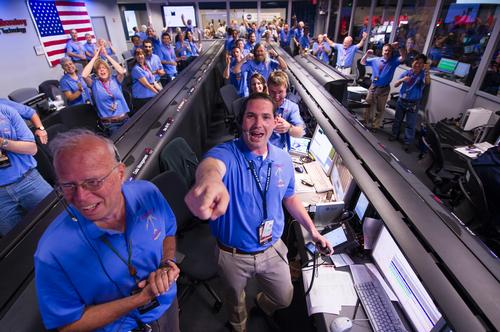
photo credit: JPL
October 10, 2012
Curiosity LIVES!
Having spent a portion of the afternoon volunteering at Planetfest, the Planetary Society’s exhibition and lecture event, we hunkered down to watch MSL make it’s descent.
Here’s NASA’s quick look at “Fast Facts” on the Curiosity Rover:
Mission name: Mars Science Laboratory
Rover name: Curiosity rover
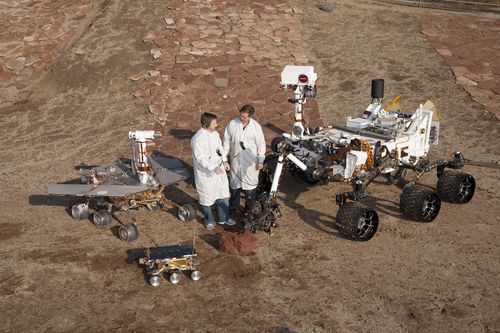
Size: About the size of a small SUV — 10 feet long (not including the arm), 9 feet wide and 7 feet tall — (about 3 meters long (not including the arm), 2.7 meters wide, and 2.2 meters tall), or about the height of a basketball player.
Arm Reach: About 7 feet (2.2 meters)
Weight: 900 kilograms (2,000 pounds)
Features: Geology lab, rocker-bogie suspension, rock-vaporizing laser and lots of cameras
Mission: To search areas of Mars for past or present conditions favorable for life, and conditions capable of preserving a record of life
Launched:
7:02 a.m. PST, Nov. 26, 2011
(10:02 a.m. EST)
Landed:
10:32 p.m. PDT, Aug. 5, 2012
(1:32 a.m. EDT, Aug. 6, 2012)
Length of mission on Mars: The prime mission will last one Mars year or about 23 Earth months.
Follow Your Curiosity:
Participate
Mission Fact sheet: Download theMars Science Laboratory Fact Sheet (PDF, 562 KB)
October 10, 2012
Seven Minutes of Terror
A great look at what needs to go exactly as planned in order for the MSL to survive its descent and landing to complete it’s mission.
http://video.nationalgeographic.com/video/news/space-technology-news/mars-curiosity-rover-vin/
October 10, 2012
Mars View Of Earth
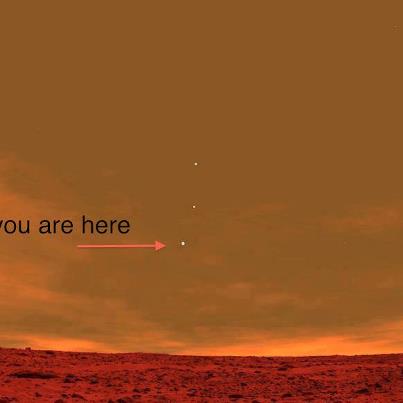
Earth as seen from Mars photo credit unavailable
Have you ever wondered what we look like from the Red Planet? Imagine, standing on the rust covered surface of Mars and waiting for the Earth to rise; this is what you’d see.
August 18, 2012
Still Life With Rover
From the Ames Research Center Facebook site: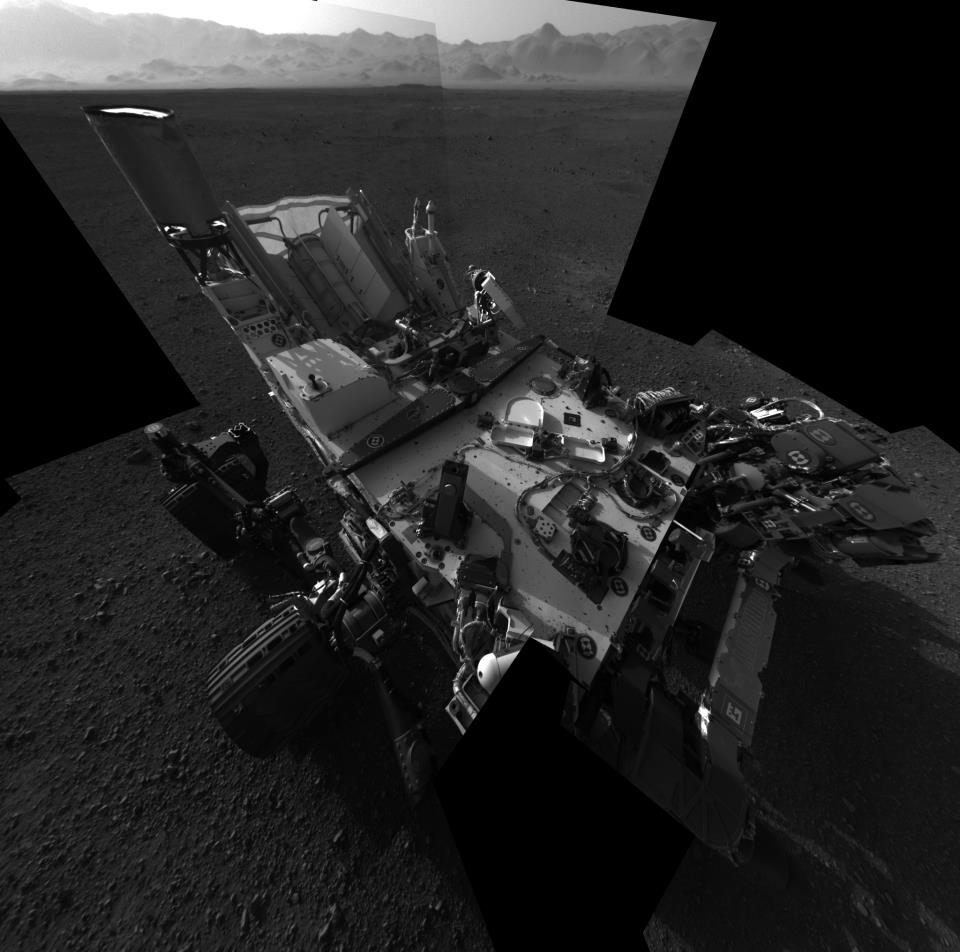
“This full-resolution self-portrait shows the deck of NASA’s Curiosity rover from the rover’s Navigation camera. The back of the rover can be seen at the top left of the image, and two of the rover’s right side wheels can be seen on the left. The undulating rim of Gale Crater forms the lighter color strip in the background. Bits of gravel, about 0.4 inches (1 centimeter) in size, are visible on the deck of the rover.
This mosaic is made of 20 images, each of 1,024 by 1,024 pixels, taken late at night on Aug. 7 PDT (early morning Aug. 8 EDT). It uses an average of the Navcam positions to synthesize the point of view of a single camera, with a field of view of 120 degrees. Seams between the images have been minimized as much as possible. The wide field of view introduces some distortion at the edges of the mosaic.
The “augmented reality” or AR tag seen on the rover deck, in the middle of the image, can be used in the future with smart phones to obtain more information about the mission.”
The “augmented reality” or AR tag seen on the rover deck, in the middle of the image, can be used in the future with smart phones to obtain more information about the mission.”
August 11, 2012
From the twitter feed of my favorite Astrophysicist, Neil DeGrasse Tyson:
 “@neiltyson: Enough on Mars. Must get back to making Earth hotter, cutting science budgets & killing each other over religious differences”
 SCIENCE ON THE WING